Author: Max

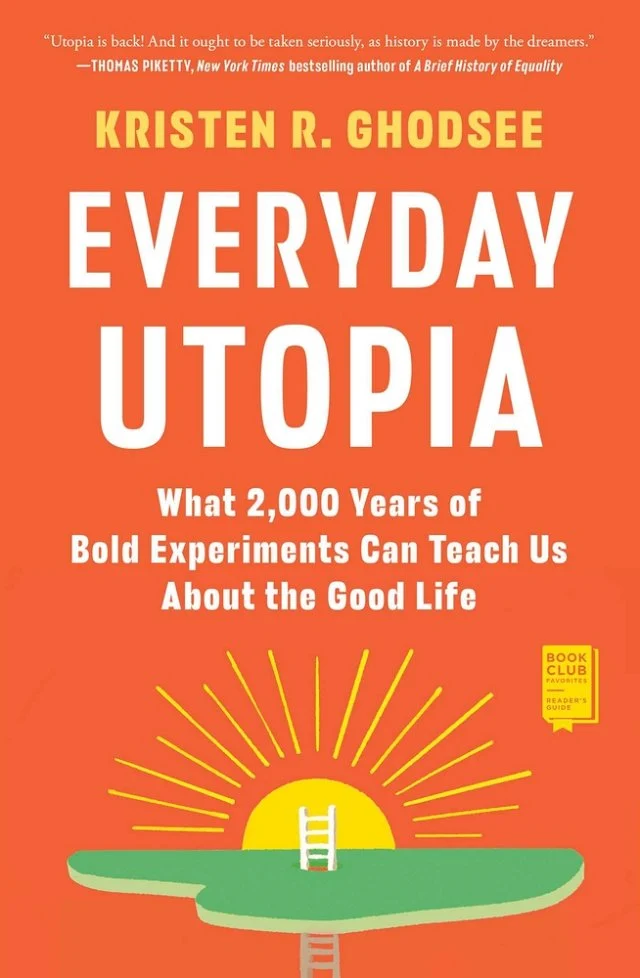
  • Everyday Utopia

    Everyday Utopia

    by Kristen R. Ghodsee

    Bookshop.org

    From the publisher:

    In the 6th century BCE, the Greek philosopher Pythagoras—a man remembered today more for his theorem about right-angled triangles than for his progressive politics—founded a commune in a seaside village in what’s now southern Italy. The men and women there shared their property, lived as equals, and dedicated themselves to the study of mathematics and the mysteries of the universe.

    Ever since, humans have been dreaming up better ways to organize how we live together, pool our resources, raise our children, and determine who’s part of our families. Some of these experiments burned brightly for only a brief while, but others carry on today: from the Danish cohousing communities that share chores and deepen neighborly bonds, to matriarchal Colombian ecovillages where residents grow their own food; and from Connecticut, where new laws make it easier for extra “alloparents” to help raise children not their own, to China where planned microdistricts ensure everything a busy household might need is nearby.

    One of those startlingly rare books that upends what you think is possible, Everyday Utopia provides a “powerful reminder that dreaming of better worlds is not just some fantastical project, but also a political one” (Rebecca Traister, New York Times bestselling author of Good and Mad). This “must-read” (Thomas Piketty, New York Times bestselling author of A Brief History of Equality) offers a radically hopeful vision for how to build more contented and connected societies, alongside a practical guide to what we all can do in the meantime to live the good life each and every day.
  • mmm.page

    mmm.page – “Dead simple, drag & drop websites for anything” feels like an understatement. These sites feel like if KidPix and GeoCities had a baby in the most awesome way. I hope we see more websites like this.

  • Low-Tech Magazine

    Low-Tech Magazine – An online magazine dedicated to low-tech solutions: “Low-tech Magazine underscores the potential of past and often forgotten technologies and how they can inform sustainable energy practices.” Completely obsessed with the brutalist web design and the fact that the entire site is solar-powered (which means it is occasionally offline.)

  • From Jason

    From Jason – Really enjoyed this self-proclaimed digital garden, especially, perhaps, the site’s dedication: “This site is dedicated to the old web, the weird web, the web that screamed in horror when summoned through a land line.” via Rachel

  • The Internet Used To Be Fun

    The Internet Used To Be Fun – Raise your hand if you can relate to this sentiment. Apparently more and more people do. My pal Rachel created this compendium on writing about the un-funning of the internet. “…here’s a collection of articles that to some degree answer the question ‘Why have a personal website?’ with ‘Because it’s fun, and the internet used to be fun.’”

  • Mail Blog

    Mail BlogCortney Cassidy’s print-and-ink zine “Mail Blog” is a blog distributed through the US Postal Service. You can sign up for free by emailing mailblog@mailbox.org. Receiving this non-electronic newsletter has added some much-needed joy to my winter 2025. More on Mail Blog in Cassidy’s A Soft Manifesto

  • Monsters

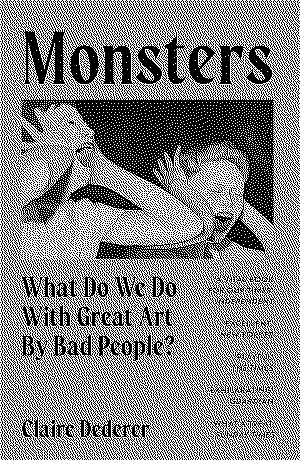
    Monsters

    by Claire Dederer

    Buy on Bookshop.org

    Description from publisher:

    From the author of the New York Times best seller Poser and the acclaimed memoir Love and Trouble, Monsters is “part memoir, part treatise, and all treat” (The New York Times). This unflinching, deeply personal book expands on Claire Dederer’s instantly viral Paris Review essay, “What Do We Do with the Art of Monstrous Men?” 
     
    Can we love the work of artists such as Hemingway, Sylvia Plath, Miles Davis, Polanski, or Picasso? Should we? Dederer explores the audience’s relationship with artists from Michael Jackson to Virginia Woolf, asking: How do we balance our undeniable sense of moral outrage with our equally undeniable love of the work? Is male monstrosity the same as female monstrosity? And if an artist is also a mother, does one identity inexorably, and fatally, interrupt the other? In a more troubling vein, she wonders if an artist needs to be a monster in order to create something great. Does genius deserve special dispensation? Does art have a mandate to depict the darker elements of the psyche? And what happens if the artist stares too long into the abyss? 
     
    Highly topical, morally wise, honest to the core, Monsters is certain to incite a conversation about whether and how we can separate artists from their art.