
Author: Max

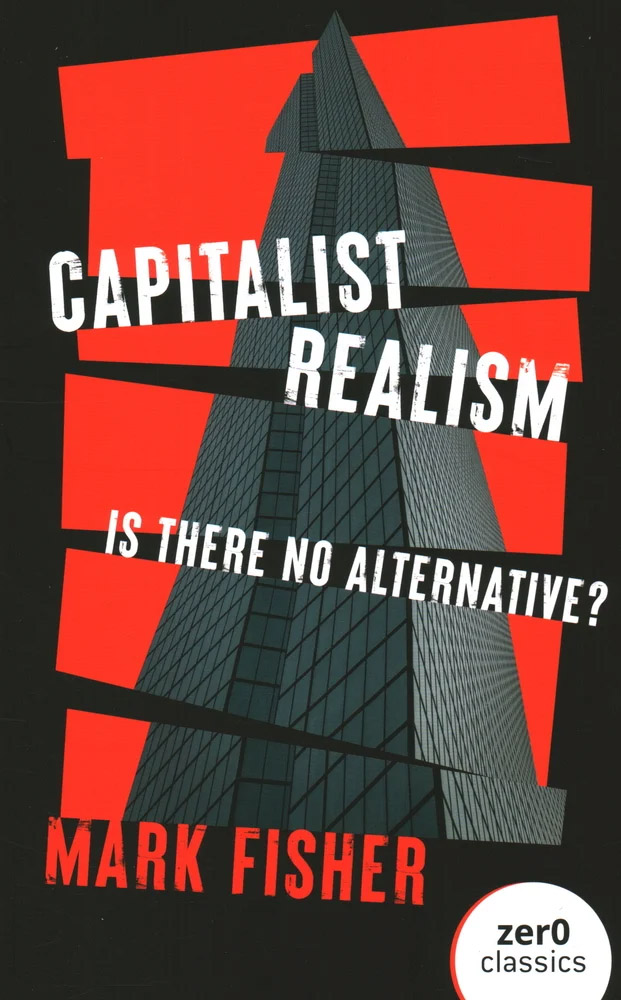
  • Capitalist Realism

    Capitalist Realism

    Capitalist Realism

    by Mark Fisher

    From the publisher:

    It is easier to imagine the end of the world than the end of capitalism. After 1989, capitalism has successfully presented itself as the only realistic political-economic system – a situation that the bank crisis of 2008, far from ending, actually compounded. The book analyses the development and principal features of this capitalist realism as a lived ideological framework. Using examples from politics, film (Children Of Men, Jason Bourne, Supernanny), fiction (Le Guin and Kafka), work and education, it argues that capitalist realism colors all areas of contemporary experience, is anything but realistic and asks how capitalism and its inconsistencies can be challenged. It is a sharp analysis of the post-ideological malaise that suggests that the economics and politics of free market neo-liberalism are givens rather than constructions.
  • The Rachel Incident

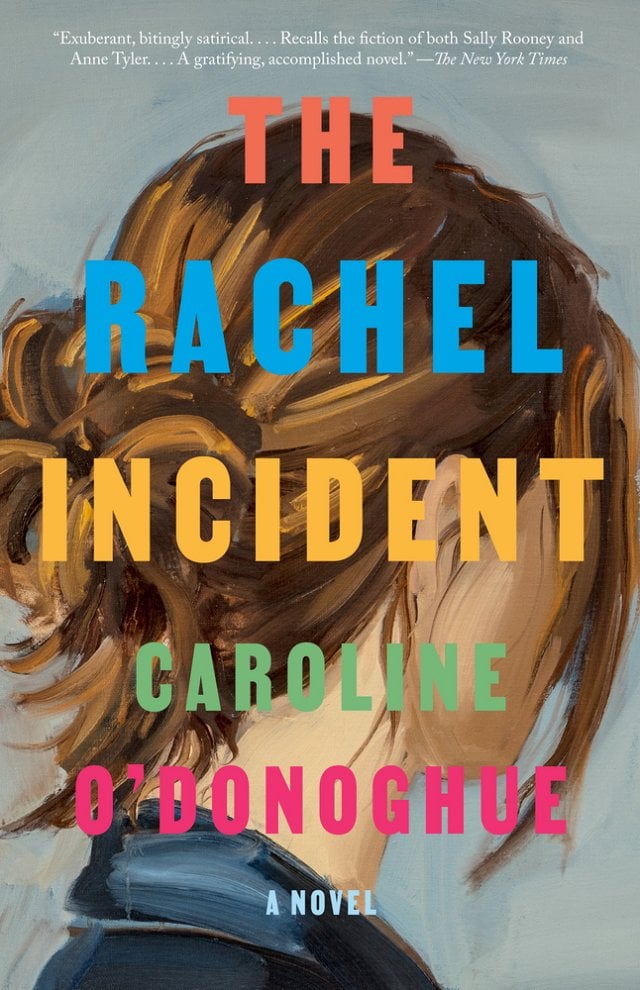
    The Rachel Incident

    by Caroline O’Donoghue

    Buy on Bookshop.org

    From the Publisher:

    Rachel is a student working at a bookstore when she meets James, and it’s love at first sight. Effervescent and insistently heterosexual, James soon invites Rachel to be his roommate and the two begin a friendship that changes the course of both their lives forever.  Together, they run riot through the streets of Cork city, trying to maintain a bohemian existence while the threat of the financial crash looms before them.

    When Rachel falls in love with her married professor, Dr. Fred Byrne, James helps her devise a reading at their local bookstore, with the goal that she might seduce him afterwards. But Fred has other desires. So begins a series of secrets and compromises that intertwine the fates of James, Rachel, Fred, and Fred’s glamorous, well-connected, bourgeois wife. Aching with unrequited love, shot through with delicious, sparkling humor, The Rachel Incident is a triumph.

  • Archive of Daily Digital Disobedience

    Archive of Daily Digital Disobedience – “The Archive of Daily Disobedience celebrates the disobedient use of technology as a creative survival code of our time.” Tips and hacks for divesting from Big Tech and its culture of surveillance. Via Rozina Aamir

  • Websites, Done Cheap

    Websites, Done Cheap – Affordable web design by Elijah Beaton. I love the takeout menu design.

  • Libra.re

    Libra.re – A website version of one reader’s personal bookshelf. I love this way of digitizing the act of visiting a friend and poring over their shelves. Via Kristoffer Tjalve’s “Personal Website Libraries” Are.na channel.

  • Radicals Radicants Epiphytes Parasites

    Radicals Radicants Epiphytes Parasites – Love the multi-colored masonry style of this site which “documents the ongoing research by Laurie Cluitmans ‘On the necessity of gardening.’” via Arianne on Substack

  • The Tyranny of Taste

    The Tyranny of Taste – “Taste isn’t innocent. While taste may seem subjective and individual — one person’s trash is another’s treasure — it also reflects existing hierarchies of power. Operating within an increasingly global and connected world, designers are challenging long-established definitions of how design looks and behaves.” Via Fuse

  • tooooools

    Tooooools – “Free minimalist and lo-fi effects for image and video processing online.” Love the dots and dithering options.

  • Queering The Map

    Queering The Map – “A community generated counter-mapping platform for digitally archiving LGBTQ2IA+ experience in relation to physical space.” Via Taking an Internet Walk

  • Syllabus

    Syllabus – An archive of articles on various subjects, structured as syllabi for extended learning. “Syllabus was born from a conversation about discovery and learning. In discussing the ways that cultural artifacts travel through a society, we imagined how a syllabus could function as a creative tool that allows you to do things like: i. present what you feel is important for others to experience or consume;  ii. group items together in ways that shade and refine their meaning;  iii. apply a conceptual or idiosyncratic approach to the syllabus form; iv. develop rogue pedagogies.” Via Naive Weekly